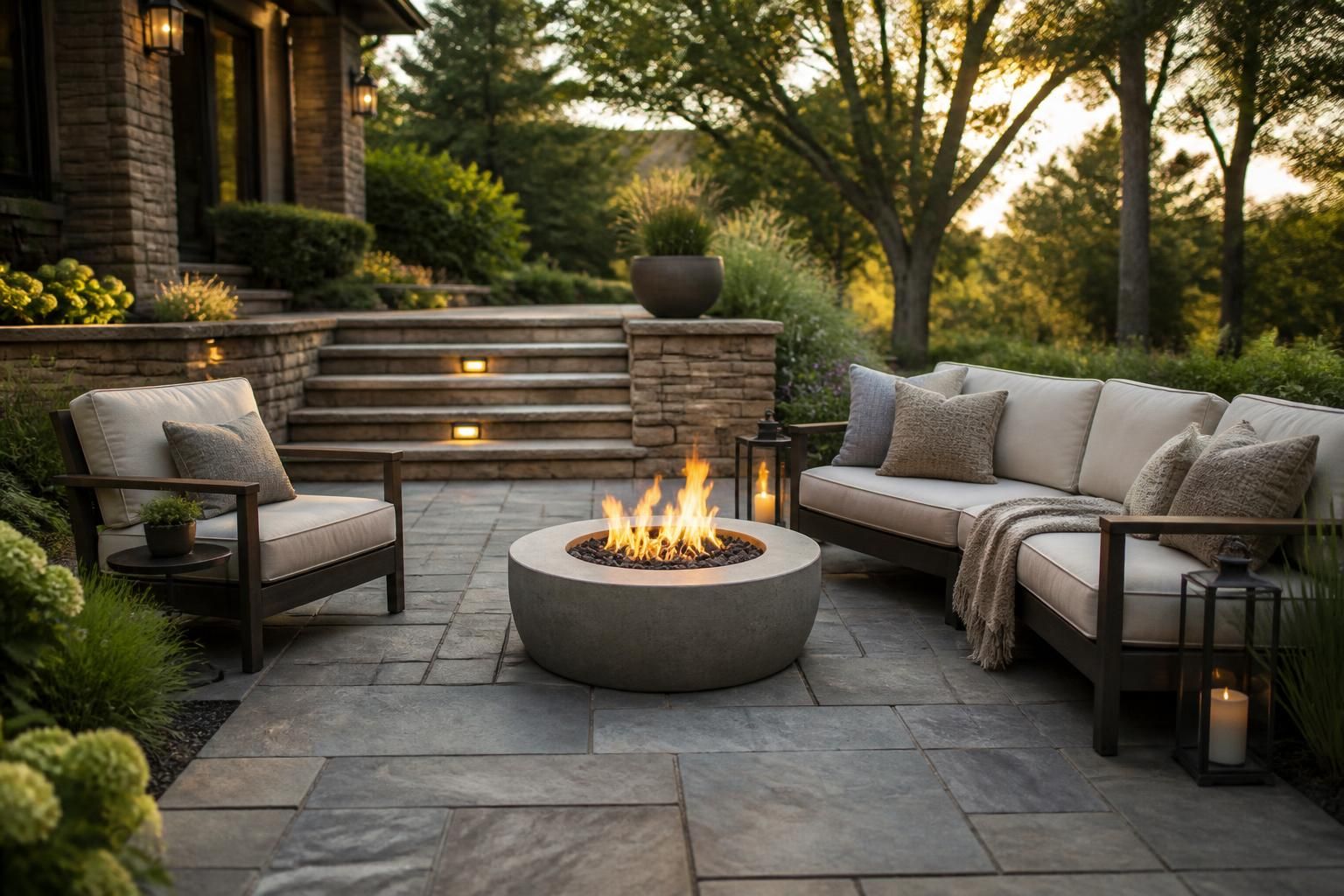
Backyards often start with good intentions and end up feeling unfinished. Maybe the patio is too small for real seating, the fire feature never got added, or the whole yard looks separate from the way you actually live outside. For many Bend homeowners, the next step is not a random upgrade. It is a clear plan for an outdoor living space that works for meals, quiet mornings, and time with guests.
Summit & Sage Landscape Design helps shape those spaces with custom patios, fire features, lighting, and planting that suits everyday use. If your yard needs more structure, better flow, or a stronger connection between hardscape and garden areas, we design outdoor living spaces for Bend, OR that feel practical, polished, and ready to use across the seasons.
An outdoor living space should do more than look finished from the window. It should support how you move through the yard, where people gather, and which areas need shade, light, or a softer transition from one zone to another. We design with those details from the start so the final layout feels intentional rather than crowded.
For Summit & Sage Landscape Design, that usually means balancing durable materials with Pacific Northwest textures and clean lines. The result is an outdoor area that feels grounded, easy to use, and suited to Bend homeowners who want a yard they can enjoy without constant rearranging or patchwork fixes.
Bend, OR outdoor living spaces work best when they are built with local habits and simple maintenance in mind. That means choosing materials, planting structure, and layouts that do not fight the space. A good plan keeps the yard comfortable to use while still looking composed from the house and the street.
We focus on drought-wise planting, native plant gardens where they make sense, and material choices that hold their shape and style over time. This approach helps the outdoor area feel complete without turning it into a high-maintenance project. It also gives you a yard that can support different uses, from relaxed afternoons to small gatherings around a fire feature.
Outdoor living spaces often feel more natural when hard surfaces and planted areas work together. We look at texture, proportion, and durability so patios, stonework, and planting beds each have a clear role. Clean edges and thoughtful transitions matter here because they keep the space from feeling scattered.
Plants should reinforce the design, not compete with it. Drought-wise plant selections can add color, movement, and structure while keeping the yard more manageable. When the planting plan is tied to the patio, lighting, and circulation paths, the whole space feels more cohesive.
A patio is often the anchor of an outdoor living space. It sets the footprint for furniture, cooking, conversation, and movement. If the layout is too tight, the space feels awkward. If it is too open without definition, it can lack a clear purpose. We design patios to fit how you actually want to use them, not just how they look on paper.
Patios and stonework can create distinct zones for dining and lounging without making the yard feel boxed in. That balance is important for Bend homeowners who want a space that feels open, but still organized enough for everyday use.
We start with the furniture, circulation, and the amount of room needed for regular use.
Stone edges, planting, and transitions help define the area without adding clutter.
The patio should connect naturally to lighting, paths, and adjacent garden areas.
Fire features and lighting can change how a yard feels after the sun goes down. They make outdoor living spaces more inviting, but they also help the area feel intentional and easier to navigate. The right placement matters as much as the feature itself.
A fire feature can become the center of conversation, while lighting helps define steps, edges, and paths. When these elements are planned together, the space feels calmer and more usable. We often recommend thinking about how the yard will feel at dusk, not only in full daylight.
A well-placed fire feature should support seating and conversation without crowding the patio. It should feel like part of the layout rather than an object added at the end. We consider scale, clearance, and how the feature relates to the rest of the outdoor room.
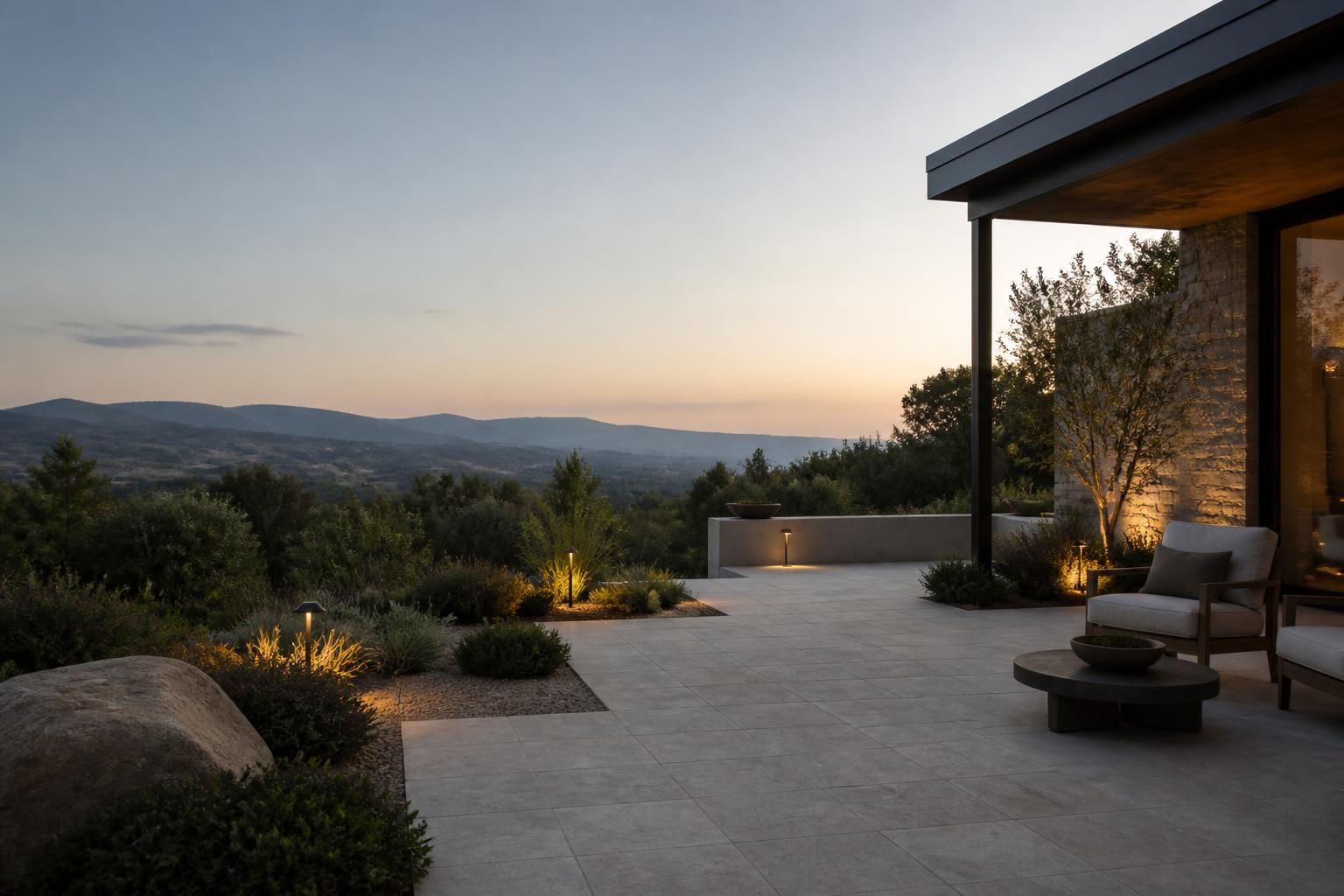
Lighting works best when it has more than one role. Soft ambient light can make the space more welcoming, while targeted light can highlight paths, entry points, or garden details. This layered approach helps the yard feel usable and polished after dark.
Hardscape gives structure, but planting gives the space its life. In outdoor living spaces, planting should soften edges, frame views, and create a relaxed rhythm around patios and gathering areas. It should also suit the rest of the design, rather than feel tacked on afterward.
For many projects, we blend native plant gardens with other drought-wise choices to keep the space attractive through the year. That can mean using repeated forms for consistency, or adding seasonal changes that bring movement without making the design messy. The goal is a yard that feels curated, not crowded.
Homeowners often know what feels off, but not how to turn that into a workable plan. That is where a structured design process helps. Summit & Sage Landscape Design starts by looking at how you want to use the space, what the yard already offers, and where the strongest opportunities for change are.
From there, we shape the outdoor living space around flow, comfort, and visual balance. The process is straightforward, but it is detailed enough to keep the design tied to real use. That way, the finished plan supports the habits you already have and the outdoor moments you want to create.
We review the shape of the yard, existing features, and the places where the design needs to do more work.
We identify what matters most, such as seating, fire, movement, lighting, or planting structure.
The design brings those priorities together into one clear outdoor room with defined functions.
Materials, planting, and transitions are adjusted so the whole space feels complete.
Outdoor living spaces are easier to enjoy when the surrounding garden stays tidy and intentional. Even a strong design can lose its clarity if planting overgrows, edges blur, or the softscape begins to fight the hardscape. Seasonal garden care helps preserve the shape of the space so it continues to feel polished through the year.
For some Bend homeowners, this means keeping the planting balanced around patios and gathering zones. For others, it means making sure the outdoor room still feels open and calm as the garden changes. We think about how the design will hold up over time, not just how it looks right after installation.
A finished outdoor living space usually has clear zones, comfortable circulation, and a thoughtful mix of hardscape, planting, and lighting. It feels planned from the house out to the edge of the yard.
Yes. Smaller yards often benefit from careful scaling, smart furniture placement, and a layout that limits wasted space. Even a compact patio can feel generous when the design is organized well.
Patios create structure, while planting softens the edges and adds texture. When both are designed together, the space feels more balanced and less rigid.
Lighting helps define paths, seating areas, and focal points after dark. It also adds depth to the design so the yard does not disappear once the sun sets.
Not always. A fire feature can be a focal point, but it should fit the overall flow of the space and work with nearby seating rather than overpower it.
It helps to bring photos of your yard, notes about how you want to use the space, and any existing features you want to keep. That gives us a clear starting point for the design.
If your yard feels underused, disconnected, or hard to picture as a true gathering space, a better layout can change that. Outdoor living spaces should support the way you live, from quiet mornings to evenings with friends, without making the yard feel busy or overdesigned.
Summit & Sage Landscape Design creates outdoor living spaces for Bend, OR homeowners who want a cleaner layout, stronger materials, and a more comfortable place to spend time outside. Contact us at hello@summitsagelandscape.com or call +1 541-555-0187. Our studio is located at 915 NW Wall Street, Bend, OR 97703, and we are available Monday-Friday 8:00 AM-6:00 PM, Saturday 9:00 AM-2:00 PM.
Start Your Project
Share your goals for the yard, patio, planting, lighting, or ongoing care, and we will help shape a landscape plan that fits your property and your routine.